White Friday is the Gulf’s version of Black Friday. It started online, but it now brings strong traffic and heavy promotions into physical stores too, from hypermarkets to electronics and beauty chains.
For FMCG brands, it is a short, intense period. Shoppers expect deals, retailers expect support, and competitors fight for the best displays. Small execution gaps cost more than usual, because every hour of an empty shelf or a missing price is an hour of peak traffic lost.
This guide gives you a practical plan to prepare your shelves and your field team before, during and after White Friday.
A normal promotion runs for a week or two. White Friday deals are often concentrated into a few days. That changes the rules:
Treat White Friday as its own execution project, with its own checklist and reporting.
Most White Friday results are decided before the first day.
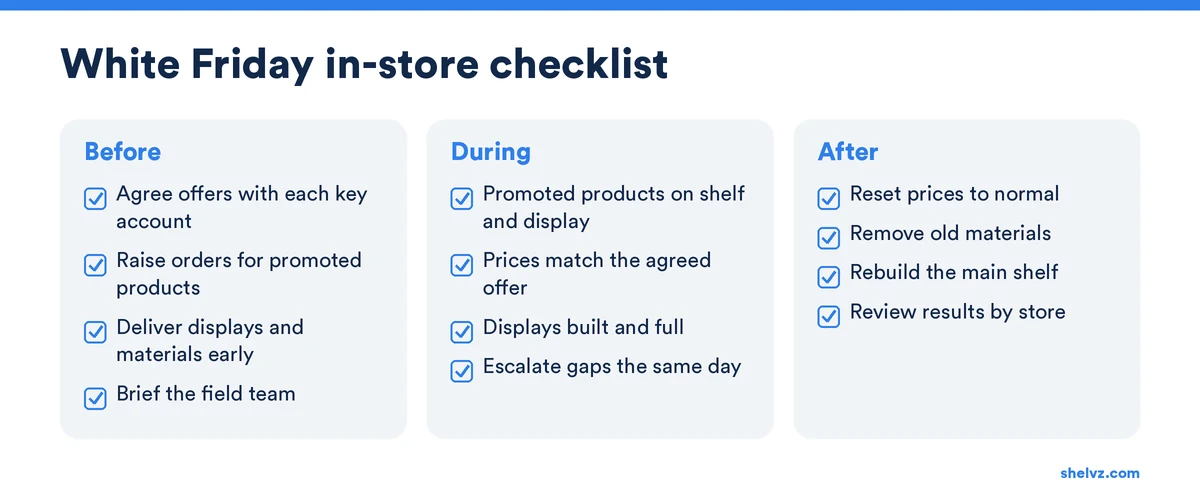
Confirm which products are on promotion, at what price, with which displays and in which stores. Write it down and share it with your field team.
Work with retailers and distributors to raise orders for promoted products. Check that stock has arrived in stores and is not stuck in the back room. Our guide on seasonal promotions and on-shelf availability covers the stock side in detail.
Deliver display units and point-of-sale materials early. Check that they arrive in the right stores and that stores know where to place them.
Every rep and merchandiser should know:
Plan extra visits to high-traffic stores during the peak. Some brands add temporary merchandisers or promoters for the busiest days.
During the peak, speed matters more than detail. Keep the daily checklist short.
Reps should fix what they can during the visit: refill shelves, correct labels, tidy displays. Then they report what they fixed and what still needs help.
Missing stock, wrong till prices or removed displays need quick action from account managers. Set up a simple daily review, for example a short call each afternoon, to go through open issues. Our article on promotion compliance audits explains how to score and follow up on these checks.
Like what you’re reading?
Take a moment to subscribe before continuing and never miss out on exclusive insights, news, and case studies.
Clear roles prevent confusion when everyone is busy.
Write these roles into the brief, with names and phone numbers. When a rep finds a problem at the busiest time of day, they should know exactly who to call. Our guide on field team management explains how to set up clear roles and reporting lines.
Shelvz gives field teams a daily peak-period checklist with photos, price checks and stock alerts, so managers see problems in every store as they happen. See Shelvz trade promotion or book a demo.
The work does not stop when the deals end.
Review results while the details are fresh.
| Question | Data to use |
|---|---|
| Did stores run the promotion as agreed? | Compliance checks and photos |
| Where did we run out of stock? | Out-of-stock reports by store and day |
| Which displays performed best? | Sales by store, with display compliance |
| What did competitors do? | Competitor price and display notes |
| What would we change next year? | Team feedback and store issues |
Compare stores that ran the promotion fully with stores that did not. This shows the real value of execution. For the financial side, see our guide on how to measure trade promotion ROI.
Start planning with key accounts several weeks before the event. Stock, displays and materials need time to reach stores.
Many brands add visits or temporary staff to their most important stores during the peak. Focus extra effort where traffic and sales are highest.
White Friday is a short, deal-driven peak. Ramadan is longer and changes what and when people buy. Each needs its own plan.
To see how Shelvz helps teams stay in control during peak periods, book a demo.
