In many GCC markets, a large share of FMCG sales still goes through small stores: groceries, baqalas, cafeterias and corner shops. These stores order small amounts, often, and want stock delivered quickly.
Van sales is the model many brands and distributors use to serve them. A sales rep drives a van loaded with stock, visits stores on a planned route, takes orders and delivers on the spot.
Van sales is fast and flexible. It is also easy to lose money on if routes, stock and cash are not well controlled. This guide covers the basics of running a profitable van sales operation.
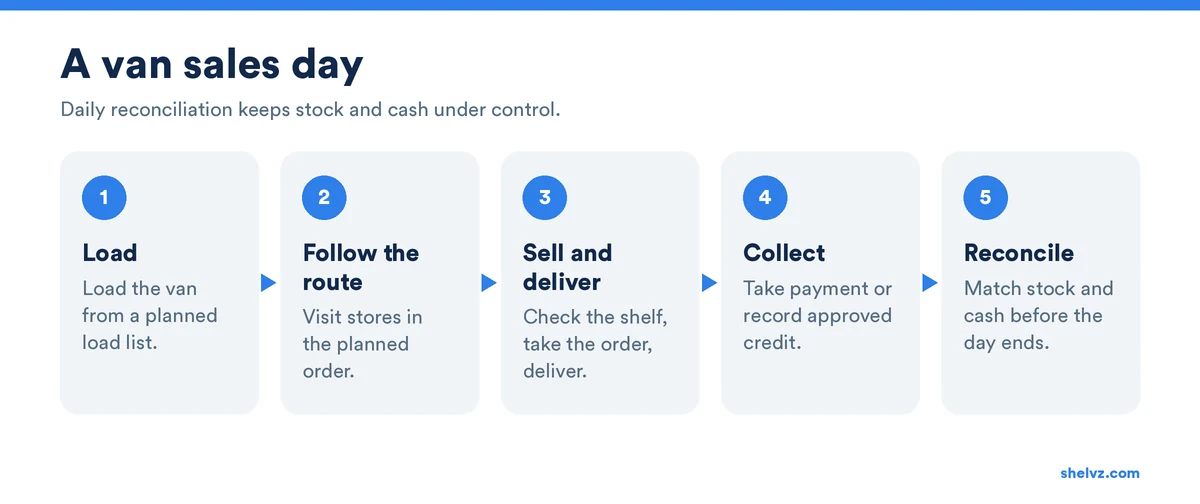
A van sales day usually follows the same steps:
There are two related models worth knowing:
Many operations mix both. Larger stores get pre-selling. Smaller stores get van selling.
Routes are the backbone of van sales. A poor route means less time selling and more time driving.
Some stores need a visit every week. Others need one every two weeks. Group stores so each day covers a tight area with the right mix of frequencies.
Each route should take a similar amount of time. Count store visits, travel time and the time each store type needs, not just the number of stores.
New stores open and others close. Review routes every few months and after any big change in the market. Our article on smart route planning for field sales explains how to build better routes.
Stock on a van is money moving around the city. Weak control leads to losses that are hard to trace.
For more on stock rotation and expiry, see our guide to shelf-life management.
Like what you’re reading?
Take a moment to subscribe before continuing and never miss out on exclusive insights, news, and case studies.
Van sales often involves cash. Clear rules protect both the company and the rep.
A van sales visit is not only an order. It is a chance to improve the shelf.
Look at what is on the shelf and what is missing. Out-of-stocks are easier to fix when the stock is in your van.
Use the store’s past orders to suggest quantities. Suggested orders help newer reps and reduce missed sales. A suggested sales order feature can calculate this automatically.
Make sure every store carries your core products. Track this with a simple must-stock checklist on each visit.
A shelf strip, a small display or a fridge sticker helps your products stand out in a small store.
Van sales reps do several jobs at once. They drive, sell, deliver, handle cash and look after the shelf. Hiring and training should reflect this.
Our guide on modern training strategies for field sales teams has more ideas for coaching reps on the road.
Shelvz field sales lets reps take orders from your catalogue, follow planned routes and record every visit, so managers see sales and coverage the same day. See Shelvz field sales or book a demo.
| KPI | What it shows |
|---|---|
| Strike rate | Share of visits that end with an order |
| Average order value | How much each order is worth |
| Lines per order | How many different products each store buys |
| Route compliance | Planned visits completed in order |
| Stock variance | Difference between expected and actual van stock |
| Collections | Cash collected against amounts due |
Look at these KPIs together. A high strike rate with low lines per order may mean reps are selling only best sellers. For a wider view of field sales measures, read field sales KPIs that drive real performance gains.
In van sales, the rep sells and delivers in the same visit. In pre-selling, the rep takes an order, and delivery happens later from another vehicle.
Van sales works best where many small stores order often and need fast delivery. For large modern trade stores, pre-selling with scheduled deliveries is often more efficient.
A mobile app lets reps follow routes, take orders from a catalogue, issue invoices and record shelf data. Managers see sales, stock and coverage without waiting for paper reports.
Want to see how Shelvz supports van sales and field sales teams? Book a demo.
