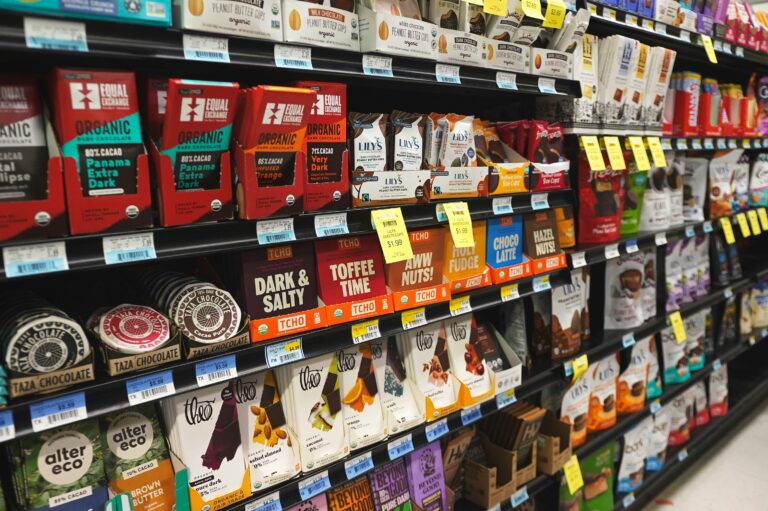
In the hyper-competitive and rapidly digitizing retail landscape of the Middle East, the gap between a brand’s strategic vision and its in-store reality represents a significant, yet often hidden, drain on profitability. The traditional, fragmented approach to shelf management—where planogram creation, in-store execution, and compliance auditing are treated as separate, slow-moving functions—is no longer viable. This disconnect creates costly delays, fosters data inaccuracies, and ultimately leads to lost sales at the most critical point of the customer journey: the shelf.
The core challenges are systemic. Manual planogram creation is a time-consuming bottleneck, in-store compliance degrades rapidly, and manual audits introduce a crippling data lag that leaves management blind to real-time store conditions. This forces brands into a reactive cycle of inefficient spending, unable to distinguish between a flawed strategy and a flawlessly planned but poorly executed one.
Addressing this fundamental disconnect, Shelvz introduces a new, unified platform that marks a shift in retail execution. Our solution integrates a state-of-the-art, AI-powered planogram builder with a cutting-edge, image recognition compliance tool. This creates a powerful, closed-loop system that connects intelligent planning directly to instant in-store verification and correction.
This unified approach transforms the entire planogram lifecycle. It empowers CPG brands and retailers to move from a process that takes weeks to one that can be completed in minutes, often within a single store visit. By collapsing the time between insight and action, Shelvz drastically reduces operational costs and manual effort, boosts sales through improved on-shelf availability and compliance, and provides the accurate, real-time data needed to win the battle for the shelf. This is not just an improvement; it is the future of retail execution.
The Battle for the Shelf: Navigating the Middle East's Dynamic Retail Arena
On-shelf execution is no longer a mere tactical task; it has become the primary strategic battleground in the Middle East’s vibrant and demanding retail sector. For Consumer Packaged Goods (CPG) brands and retailers, winning at the point of purchase is paramount. The scale of this opportunity is immense, defined by massive market valuations and propelled by a technologically sophisticated consumer base whose expectations for in-store excellence are higher than ever.
Market Scale and Growth: A Region of Unprecedented Opportunity
The sheer size and growth trajectory of the Middle East’s key retail markets underscore the high stakes involved. This is not a nascent market but a global powerhouse demanding sophisticated operational capabilities.
United Arab Emirates (UAE): The UAE retail market achieved a staggering value of USD 145.3 Billion in 2024 and is on a clear growth path to reach USD 227.1 Billion by 2033, demonstrating a compound annual growth rate (CAGR) of 5.1%. (https://www.imarcgroup.com/uae-retail-market) Other analyses confirm this dynamic growth, valuing the 2024 market at USD 44.38 Billion and projecting it to hit USD 61.89 Billion by 2030. (
https://www.techsciresearch.com/report/uae-retail-market/1508.html) This expansion is fueled by strong consumer spending and a thriving tourism sector, making every square meter of retail space intensely competitive.
Saudi Arabia (KSA): The Kingdom represents the region’s largest retail market, valued at an impressive USD 282.2 Billion in 2024. Forecasts project this to grow to USD 402.7 Billion by 2033, with a CAGR of 4.03%. (https://www.imarcgroup.com/saudi-arabia-retail-market) This growth is supercharged by a digital revolution; e-commerce activity alone surged by 26% year-over-year in 2024. (
https://enterprise.news/ksa/en/news/story/ebc0fa68-3384-4895-b40a-e8c88949bf2c/retail-market-rebounds-in-2024–knight-frank)
Qatar: Following its global spotlight during the FIFA World Cup, Qatar’s retail sector is demonstrating robust growth. Valued at USD 18 Billion in 2024, the market is projected to climb to USD 27.62 Billion by 2032 at a CAGR of 5.5%. (https://www.verifiedmarketresearch.com/product/qatar-retail-market/) Another forecast anticipates growth from USD 25.37 billion in 2025 to USD 32.07 billion by 2030, driven by high disposable incomes and a 99.4% urbanization rate. (
https://www.mordorintelligence.com/industry-reports/retail-industry-qatar-market)
The FMCG sector, a core focus of shelf management, reflects this regional boom. In 2024, the FMCG market grew by 5.5% in the UAE and 2.4% in KSA, with online FMCG sales rocketing by 29% and 46% respectively. (https://arabadonline.com/en/article/5667-The-Middle-East-continues-to-be-a-hub-for-growth-in-both-FMCG-and-TD-reveals-NielsenIQ) This data paints a clear picture: the financial rewards for effective in-store execution are enormous, while the cost of falling behind is equally significant.
The Tech-Forward Consumer and the Modernization of Retail Execution
Compounding the market’s scale is its rapid technological advancement. Consumers in the Middle East are among the most digitally connected in the world, and this digital fluency shapes their expectations of the physical retail environment. They anticipate a seamless, efficient, and personalized experience, whether they are shopping online or in a brick-and-mortar store.
This trend is powerfully illustrated by the swift adoption of AI in retail. In the UAE, a remarkable 70% of consumers now use AI tools to inform their shopping decisions, a 44% jump from 2024 alone. (https://en.aletihad.ae/news/uae/4576278/70–of-uae-consumers-use-ai-to-shop–up-44–from-2024—repo) This rapid uptake, particularly a 49% increase among Gen X consumers, signals that AI-driven efficiency and discovery are becoming mainstream expectations across all demographics.
This consumer-led trend is mirrored by government-led strategic initiatives. Saudi Arabia’s Vision 2030 is a key catalyst, driving a massive digital transformation across the economy. The Kingdom’s digital transformation market is forecasted to grow at an astonishing 30.9% CAGR, reaching nearly USD 70 Billion by 2030. (https://www.grandviewresearch.com/horizon/outlook/digital-transformation-market/saudi-arabia) This national strategy fosters a fertile environment for advanced technologies, with the government actively promoting AI integration, cloud-first policies, and a robust digital infrastructure to create a thriving, knowledge-based society.
This confluence of a high-growth market and a technologically advanced consumer and regulatory environment creates a critical challenge for CPGs and retailers. While brands invest heavily in high-tech digital marketing, AI-driven e-commerce, and sophisticated supply chains, the “last mile” of their strategy—the physical shelf—often remains stuck in an analog past. The use of manual, slow, and error-prone methods for planogramming and in-store auditing creates a jarring disconnect. In the context of the Middle East, this “execution gap” is not merely an operational inefficiency; it is a profound strategic failure. It undermines the enormous investments made in brand building and digital presence, creating a poor in-store experience that clashes directly with the expectations of a modern, tech-savvy consumer. Failure to modernize at the shelf is a failure to compete effectively in the region.
The Disconnected Planogram Lifecycle: A Hidden Drain on Profitability
The traditional approach to managing the retail shelf is a fragmented and inefficient process, a relic of a pre-digital era that is fundamentally broken. This disconnected lifecycle, stretching from planogram creation to in-store execution and compliance auditing, is a major source of wasted resources, lost sales, and strategic blindness. By deconstructing this archaic workflow, the true cost of inefficiency becomes alarmingly clear, establishing the critical need for a modern, integrated solution.
Like what your reading?
Take a moment to subscribe before continuing and never miss out on exclusive insights, news, and case studies.

Stage 1: The Pain of Manual Planogram Creation
The journey to the perfect shelf begins with a planogram, the visual blueprint for product placement. Yet, for many organizations, this foundational step is mired in manual, time-consuming processes that are both inefficient and inherently flawed.
The Time Sink: The conventional method often involves using generic tools like Excel or PowerPoint, where a merchandiser painstakingly creates a planogram by manually arranging product images in a table or on a slide. (https://planohero.com/en/blog/manual-vs-automated-planogram/) This process is incredibly slow. Creating a single, simple planogram can take several hours. For a more complex category reset, such as a 36-foot section, the task can consume an entire day or more for an experienced specialist. (
https://planohero.com/en/blog/manual-vs-automated-planogram/)
The Inherent Inaccuracy: This manual process is not only slow but also dangerously error-prone. One of the most common points of failure is the use of inaccurate or incomplete data regarding product dimensions, fixture sizes, or store layouts. (https://planohero.com/en/blog/planogram-compliance/) A planogram built on flawed data is doomed from the start; when sent to the store, products may not fit on the shelf, or large empty spaces may appear. This forces the in-store staff to abandon the plan and improvise, immediately rendering the planogram non-compliant and making any subsequent analysis of its effectiveness meaningless.
Stage 2: The High Cost of In-Store Non-Compliance
Once a planogram is created, the next challenge is ensuring it is executed correctly and maintained over time. This is where the financial consequences of the disconnected lifecycle become most apparent.
Direct and Staggering Sales Loss: The failure to execute planograms correctly has a direct and quantifiable impact on the bottom line. Research from the ISI Sharegroup estimates that the total cost of non-compliance to the U.S. retail industry is approximately 1% of gross product sales. (https://www.cosyrobo.com/InsightsWhitepapers/Planogram-Compliance-Making-It-Work.pdf) For a large retailer, this can translate into lost sales ranging from $1 million to $30 million annually. (
https://www.aforza.com/what-is-planogram-compliance/) A benchmark study by the National Association of Retail Marketing Services (NARMS) found that achieving 100% reset compliance can deliver a sales lift of 7.8% and a profit improvement of 8.1% within just two weeks, highlighting the immense opportunity cost of non-compliance. (
https://www.cosyrobo.com/InsightsWhitepapers/Planogram-Compliance-Making-It-Work.pdf)
Rapid Shelf Degradation: The problem is compounded by the speed at which compliance deteriorates. Even when a planogram is executed perfectly, it is estimated to go out of compliance at a rate of 10% every single week. (https://www.cosyrobo.com/InsightsWhitepapers/Planogram-Compliance-Making-It-Work.pdf) This decay is caused by routine retail activities—customer interactions, restocking errors, and new product introductions. This means that within a matter of weeks, a perfectly set shelf can become a chaotic, non-compliant display that undermines the entire merchandising strategy.
The Out-of-Stock (OOS) Catastrophe: Poor planogram compliance is a primary driver of out-of-stock situations, one of the most damaging events in retail. The global cost of OOS is astronomical, with retailers losing an estimated $1.75 trillion annually. (https://everbluepartners.com/2024/12/the-real-cost-of-empty-shelves-and-poor-inventory-management-in-retail/) For CPG retailers specifically, stockouts led to a 7.4% loss in sales in 2021. (
https://www.slimstock.com/blog/the-hidden-cost-of-stockouts-why-retailers-cant-afford-empty-shelves/) The consumer reaction to an empty shelf is devastating for brands: one study found that when faced with an OOS, 31% of shoppers will purchase the item from a competitor, 15% will delay their purchase, and another 9% will not purchase the item at all, representing a permanent loss of that sale. (
https://www.cosyrobo.com/InsightsWhitepapers/Planogram-Compliance-Making-It-Work.pdf) This demonstrates that non-compliance doesn’t just hurt sales today; it actively sends customers to rival brands.
Stage 3: The Blind Spot of Manual Audits
To combat non-compliance, brands deploy field teams to conduct in-store audits. However, when performed manually, this verification step introduces its own set of debilitating inefficiencies, creating a significant blind spot between the head office and the retail floor.
- Time-Consuming and Expensive: A manual audit is an incredibly labor-intensive activity. The process of planning visits, executing checks in-store, and then manually compiling reports, attaching photos, and quantifying results can take weeks from start to finish. (https://goaudits.com/blog/store-visits-retail-audits-app/) One case study highlighted a team that spent 70 hours per week just to inspect ten stores before adopting an automated solution. The administrative burden is immense; research shows that for every six hours an internal auditor spends on testing and evaluation, they spend an additional four hours on purely administrative tasks like tracking requests, preparing reports, and managing files. (
- https://auditboard.com/blog/save-1000-sox-hours/) This makes manual auditing a costly and inefficient use of skilled personnel.
- Inaccurate and Inconsistent Data: Beyond the time cost, manual data collection is notoriously unreliable. The process is susceptible to human error, subjective interpretation of guidelines, and simple fatigue. (https://www.paralleldots.com/resources/blog/planogram-compliance-monitoring-retail-strategy) Different field representatives may record data differently, leading to inconsistent reports that are difficult to aggregate and analyze meaningfully. One study found that incorrect manual data entries can cost a business as much as 30% of its revenues due to the flawed decisions that result. (
- https://www.retailinsight.io/blog/unveiling-the-true-cost-of-inventory-inaccuracy) This lack of trustworthy data makes it impossible for management to get a true picture of what is happening across their retail network.
The combination of these fragmented stages—slow creation, rapid degradation, and delayed verification—creates a systemic failure. There is a fundamental data lag, an “execution black hole,” between the moment a plan is conceived and the moment management receives feedback on its implementation. This delay can be weeks or even months long.
Consequently, when sales figures for a particular product or category are poor, leadership is left guessing at the root cause. Was the promotional strategy flawed? Or was the strategy sound, but the in-store execution—the displays, the pricing, the shelf placement—a complete failure? Without real-time, ground-truth data, it is impossible to know. This strategic blindness forces CPG brands into a vicious cycle of reactive and wasteful spending. They invest in new marketing campaigns or deeper discounts to address poor performance, without realizing that the previous promotion may have failed simply because it was never executed correctly in the first place. (https://cleardemand.com/why-brands-are-struggling-with-the-out-of-stock-question/) This not only wastes millions in marketing and trade promotion budgets but also erodes ROI and creates unnecessary friction with retail partners, who may be blamed for poor sales when the issue is a systemic inability to execute.
Introducing the Shelvz Planogram Solution: Closing the Loop on Retail Execution
The chronic inefficiencies of the disconnected planogram lifecycle demand a new approach. Incremental improvements to a broken process are insufficient. What is required is a fundamental re-engineering of how brands and retailers manage the shelf. Shelvz delivers this transformation with a single, integrated platform that unifies the two most critical functions of shelf management: AI-powered planogram creation and image recognition-based compliance auditing. This is not just another software tool; it is a holistic solution designed to close the loop on retail execution.
The Unified Vision: From Fragmentation to Integration
The core philosophy behind the Shelvz platform is unification. Instead of treating planning, execution, and auditing as separate tasks handled by different teams using disparate tools (like spreadsheets, email, and paper checklists), our solution brings the entire lifecycle into one seamless, intelligent workflow. (https://www.fuseworkforce.com/blog/10-benefits-of-unified-workforce-management-software) This integrated approach eliminates the data silos, communication gaps, and time lags that plague traditional methods.
The platform creates a single source of truth for all stakeholders, from the category manager at headquarters to the merchandiser in the field. (https://www.fleetroot.com/blog/7-benefits-of-using-a-single-unified-platform/) This consolidation dramatically reduces complexity, streamlines communication, and fosters a more collaborative and effective relationship between the head office and field teams. (
https://devtac.com/boosting-business-efficiency-and-collaboration-the-benefits-of-a-unified-platform-of-applications/)
Closing the Loop: The Core of the Transformation
The central metaphor for this transformation is “closing the loop.” This refers to the creation of a direct, real-time feedback mechanism between the strategic plan (what the shelf should look like) and the on-the-ground reality (what the shelf actually looks like).
Consider the traditional, fragmented workflow:
- The Plan: A category manager creates a planogram in Excel.
- Distribution: The file is sent via email to a regional manager.
- Assignment: The regional manager forwards it to a field representative.
- Execution: The field rep attempts to implement the planogram in-store.
- Audit (Weeks Later): A different rep or auditor visits the store to manually check compliance, taking notes and photos.
- Reporting: The auditor returns to the office and spends hours compiling a report.
- Analysis: Management finally receives the report and identifies a problem.
- Corrective Action: A new task is created, and another rep is dispatched for a follow-up visit to fix the issue, weeks after it was first implemented incorrectly.
This long, convoluted chain is fraught with potential for error, delay, and miscommunication at every step.
Now, consider the seamless, closed-loop workflow within the Shelvz unified platform:
- The Plan: A category manager uses the AI-powered builder to generate a data-driven, store-specific planogram.
- Distribution & Execution: The planogram is instantly distributed to the field representative’s mobile app with clear instructions.
- Audit & Analysis (In-Store, In-Seconds): During the same visit, the rep takes a photo of the shelf. The image recognition AI instantly analyzes it, compares it to the correct planogram, and provides a real-time compliance score and a list of discrepancies directly on the rep’s device.
- Corrective Action (In-Store, In-Minutes): Armed with this instant, actionable data, the rep can correct any placement errors on the spot. They can then take a second photo to verify that the fix has been implemented correctly, closing the loop in a matter of minutes, not weeks.
This single-platform approach transforms retail execution from a series of disconnected, reactive tasks into a single, proactive, and highly efficient process. It replaces ambiguity and delay with clarity and immediacy, empowering teams to achieve in-store excellence with unprecedented speed and accuracy.

Intelligent Planogram Creation – From Days to Data-Driven Minutes
The first pillar of the Shelvz unified solution addresses the foundational bottleneck of the traditional lifecycle: the creation of the planogram itself. By replacing slow, manual, and intuition-based methods with an AI-powered, rule-based engine, Shelvz transforms planogramming from a subjective art into a scalable data science. This allows retailers and CPG brands to design and deploy optimized, store-specific shelf strategies with unparalleled speed and intelligence.
How the AI-Powered, Rule-Based Engine Works
The core of our planogram builder is a sophisticated engine that allows managers to translate their merchandising strategy into a set of clear, enforceable rules. (https://www.nexgenus.com/products/planogram-shelf-space-planner) Instead of manually dragging and dropping images, users define the logic that should govern the shelf layout. These rules can be based on a wide range of strategic objectives and data points, including:
Sales Performance: “Give top-selling SKUs more facings,” or “Place high-velocity items on the most accessible shelves”. (https://www.quantzig.com/blog/benefits-of-planogram-retail/)
Profitability: “Position high-margin products at eye-level to maximize profitability”. (https://planohero.com/en/blog/10-benefits-of-planogram-software-in-retail-merchandising/)
Brand Strategy: “Group all products from Brand X together in a vertical block,” or “Ensure our premium line is always on the top shelf”.
Retailer Agreements: “Dedicate 25% of the category’s share of shelf to our brand as per the contract”.
Consumer Behavior: “Place complementary products next to each other to encourage cross-selling”. (https://dragonflyai.co/resources/blog/the-importance-of-planograms-in-retail)
Once these rules are defined, the platform’s artificial intelligence gets to work. It analyzes the relevant data—sales figures, product dimensions, fixture specifications, and inventory levels—and automatically generates planograms that are perfectly optimized according to the predefined strategy. (https://www.nexgenus.com/company/blog/The-Role-of-AI-in-Enhancing-Retail-Shelf-Compliance) The system is designed to be space-aware, ensuring that every generated planogram is a perfect fit for the specific fixtures in each unique store. (
https://www.symphonyai.com/resources/blog/retail-cpg/planogram-automation-solves-category-managements-toughest-challenge/)
The Key Benefits of AI-Powered Planogram Creation
This shift from manual labor to intelligent automation delivers a host of transformative benefits that directly impact both operational efficiency and financial performance.
Unprecedented Speed and Efficiency: The most immediate benefit is a dramatic reduction in the time and effort required to create planograms. Automation can slash planogram creation time by up to 80% and improve the overall efficiency of the merchandising process by 50%. (https://www.leafio.ai/auto-planogram-generation/) Complex tasks that once took merchandisers hours or even entire days of tedious manual work can now be completed in a matter of minutes. (
https://planohero.com/en/blog/manual-vs-automated-planogram/) This frees up category managers from mundane, repetitive tasks, allowing them to focus on higher-value strategic analysis and planning.
True Scalability for Localized Execution: For the first time, creating thousands of unique, store-specific planograms becomes not just possible, but easy. The AI engine can effortlessly generate localized layouts that are tailored to the specific store format, fixture dimensions, and consumer demand patterns of each location. (https://beam.ai/articles/the-transformative-impact-of-ai-on-planogram-creation-and-approval) This moves brands away from a “one-size-fits-all” approach, which is often ineffective, to a highly targeted strategy that optimizes the product assortment for each individual community and store, a critical factor for success in the diverse markets of the Middle East.
Data-Driven Optimization for Increased Sales: By grounding every planogram in hard data rather than human intuition, the system ensures that shelf layouts are scientifically designed to maximize sales and profitability. This data-driven approach has been shown to deliver significant financial returns. Retailers who have implemented automated, data-driven planogramming report sales increases of 15-20% and category sales growth between 10-35%. (https://planohero.com/en/blog/10-benefits-of-planogram-software-in-retail-merchandising/) The system helps identify underperforming SKUs and optimize space allocation, ensuring that every inch of the shelf is working to its full potential. (
https://dotactiv.com/blog/service-spotlight-data-driven-planograms)
Elimination of Costly Errors: Automation inherently eliminates the human errors that are common in manual, spreadsheet-based planning. (https://planohero.com/en/blog/planogram-compliance/) By using a centralized and validated library of product and fixture data, the system ensures that every generated planogram is accurate and implementable, preventing the costly downstream problems of plans that don’t fit the physical space.
By automating and optimizing the very first step of the retail execution lifecycle, the Shelvz platform lays a foundation of speed, accuracy, and intelligence that amplifies the effectiveness of every subsequent action.
of product category planograms are not compliant with their prescribed planograms.

Instant Shelf Intelligence – Compliance and Correction with Image Recognition
The second pillar of the Shelvz unified solution tackles the critical “last mile” of retail execution: verifying what is actually happening on the shelf. By leveraging state-of-the-art AI-powered image recognition (IR), our platform replaces slow, inaccurate, and labor-intensive manual audits with a system that delivers instant, objective, and actionable shelf intelligence. This technology not only provides unprecedented visibility but also fundamentally transforms the role of the field team from data collectors to on-the-spot problem solvers.
The Technology in Action: From Photo to Insight in Seconds
The process is designed for maximum simplicity and speed in the field. A merchandiser or sales representative, using the Shelvz mobile application on a standard smartphone or tablet, simply takes a photograph of the retail shelf. (https://www.form.com/ir-planogram-compliance/)
In the background, our powerful AI engine, trained on millions of product images, gets to work. Within seconds, it performs a comprehensive analysis of the image, accomplishing several tasks simultaneously (https://www.infilect.com/library/all-about-planogram-compliance) :
Product Identification: It accurately identifies every visible SKU on the shelf.
Planogram Comparison: It retrieves the correct, master planogram for that specific store and fixture from the unified platform’s central database.
Discrepancy Analysis: It compares the reality captured in the photo against the ideal state defined by the planogram, identifying every deviation.
of promotions fail to break even.
Unmatched Speed and Superior Accuracy
The performance leap from manual auditing to image recognition is monumental.
Transformative Time Savings: The in-store audit process is dramatically accelerated. A task that would typically take a representative 15 minutes or more of careful, manual checking and note-taking is completed in the few seconds it takes to snap a photo and receive the analysis. (https://deltasalesapp.com/blog/image-recognition-in-retail-execution-smarter-shelf-audits) For a large-scale operation, this efficiency gain is massive, with the potential to save over 25 million minutes in store audits annually and reduce overall audit time by as much as 60-70%. (
https://www.infilect.com/library/all-about-planogram-compliance)
Objective and Consistent Accuracy: AI-powered image recognition delivers a level of accuracy that is simply unattainable through manual methods. Advanced IR systems can achieve accuracy rates of 95% to 98%. (https://planohero.com/en/blog/planogram-compliance/) This is a significant improvement over even the most diligent human auditors, whose accuracy is typically around 90% and can be influenced by factors like fatigue or subjective interpretation. Image recognition removes this subjectivity, applying the same precise analytical logic to every audit, ensuring that the data collected is consistent, reliable, and comparable across the entire field team and all retail locations.
Rich, Actionable Data Delivered in Real-Time
Immediately following the analysis, the field representative receives a clear, comprehensive report directly on their mobile device. This isn’t raw data that requires later interpretation; it’s a dashboard of actionable KPIs that provides a complete health check of the shelf:
Planogram Compliance Score: A simple, powerful percentage that quantifies exactly how well the shelf adheres to the master planogram, providing an instant measure of execution quality. (https://www.infilect.com/library/all-about-planogram-compliance)
On-Shelf Availability (OSA): The system identifies every out-of-stock and low-stock situation, providing a precise count of facings for each SKU. This is critical for preventing lost sales. (https://www.relexsolutions.com/solutions/planogram-software/)
Share of Shelf (SOS): The AI measures the linear space occupied by your brand’s products and compares it to that of your competitors on the same shelf, delivering a crucial competitive intelligence metric.
Pricing and Promotion Compliance: The system can be trained to verify that the correct price tags and promotional materials are in place, ensuring that marketing and pricing strategies are being executed as intended. (https://planohero.com/en/blog/planogram-compliance/)
This shift from delayed, manual reporting to instant, automated intelligence has a profound impact. Traditionally, the primary function of a field auditor was to act as a “human camera” and scribe—observing conditions and recording data for someone else to analyze later. (https://goaudits.com/blog/store-visits-retail-audits-app/) Their value was in the collection of raw information.
The Shelvz platform, with its image recognition capabilities, automates this low-level data collection with superhuman speed and accuracy. This automation fundamentally redefines the role and value of the field representative. No longer bogged down by the tedious and error-prone task of manual checking, they are liberated to become strategic assets in the field. Armed with immediate, objective, and actionable data on their device, they can pivot from simply recording a problem to actively solving it. During the very same store visit, they can use their freed-up time to engage in high-value activities: physically correcting a display error, using the real-time OOS data to have an informed restocking conversation with the store manager, or documenting a competitor’s new promotional activity. Their job evolves from tactical auditing to strategic, on-the-spot execution, dramatically increasing their productivity and their impact on the bottom line.

The Future of Retail Execution is Unified, Instantaneous, and Here
The dynamics of the Middle East retail market are clear: growth is explosive, competition is fierce, and consumers are technologically empowered. In this environment, clinging to outdated, fragmented, and manual processes for in-store execution is no longer a viable strategy—it is a direct path to diminished profitability and market share. The gap between a brilliant planogram conceived at headquarters and the chaotic reality on a distant store shelf represents the single greatest point of failure in the modern retail value chain.
The Shelvz unified platform is purpose-built to eliminate this gap. By seamlessly integrating an AI-powered planogram builder with an instantaneous image recognition compliance tool, we have created a closed-loop system that transforms retail execution from a reactive cost center into a proactive, data-driven engine for growth.
This is not an incremental improvement. It is a fundamental transformation that delivers measurable results at every stage of the lifecycle. It replaces hours of manual planogram design with minutes of automated, data-driven optimization. It substitutes weeks of delayed, inaccurate manual audits with seconds of objective, AI-powered analysis. Most importantly, it collapses the time between identifying a problem and implementing a solution from weeks to minutes, empowering field teams to achieve perfect store execution in a single visit.
In the fast-paced, high-stakes retail arena of the Middle East, the ability to see, understand, and act on shelf-level reality in real-time is a decisive competitive advantage. The technology to achieve this is no longer a future concept; it is a present-day reality. Adopting this unified approach is essential for any CPG brand or retailer that is serious about winning at the shelf.
Stop guessing. Stop waiting. Stop losing sales to a disconnected process. The future of retail shelf management software is unified and instantaneous.
Contact Shelvz today to schedule a live demonstration and see how you can turn every store visit into a perfect execution.